
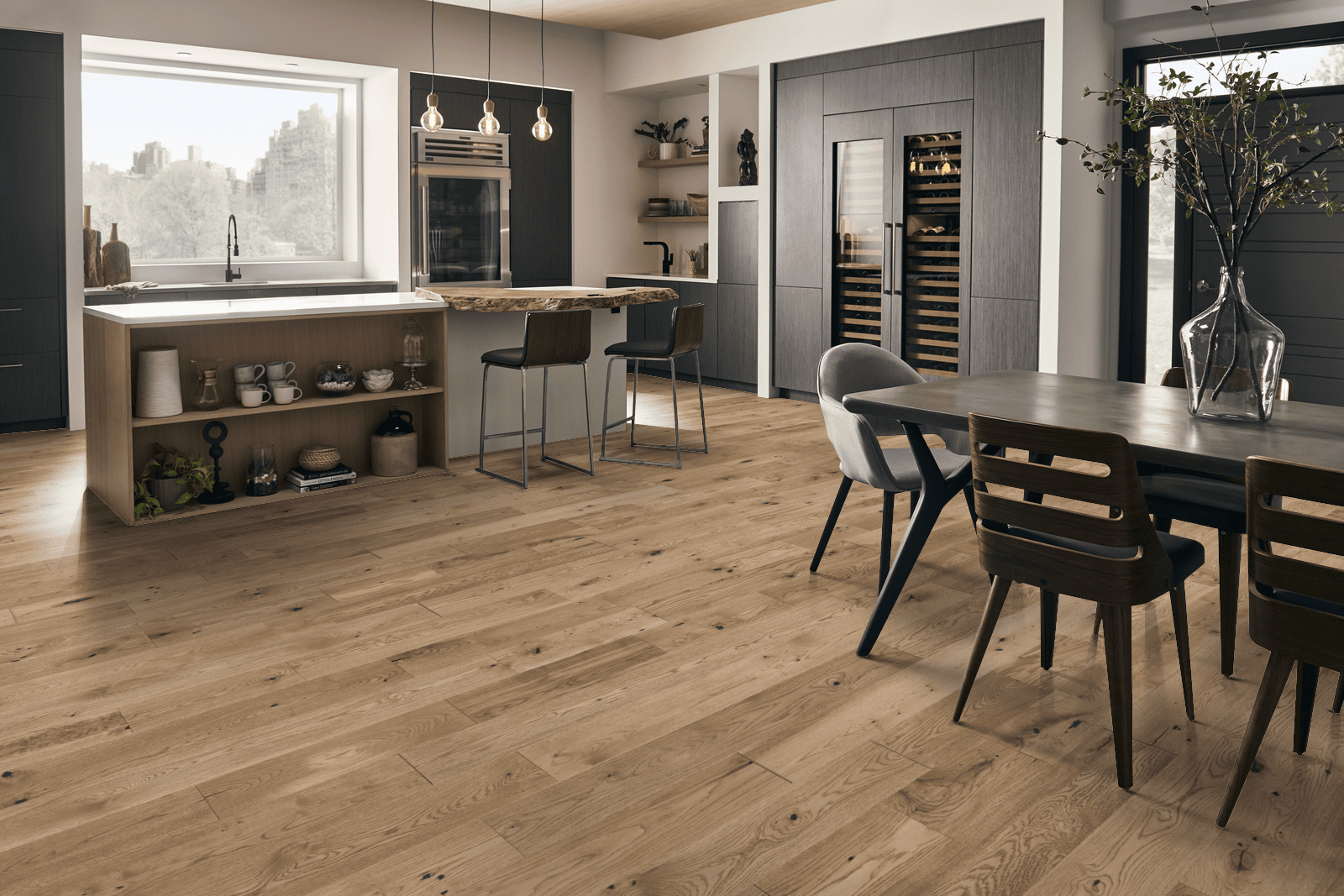
If you’ve lived in the Charleston area for more than a season, you already know the air here does something to a house that drier climates never have to deal with. Choosing the best flooring for Charleston’s humidity isn’t just a style decision — it’s a practical one, and getting it wrong shows up months later as cupped boards, warped planks, or a musty smell you can’t quite trace.
From the historic crawl spaces of downtown Charleston to the marsh-adjacent air in Mount Pleasant and the newer slab foundations going up around Summerville, humidity affects every home differently. Whether you’re a homeowner in a historic Charleston renovation or working with a Summerville flooring company on new construction, the right choice depends on your specific foundation and climate exposure. This guide breaks down which flooring options actually hold up in this climate, where they perform best, and where they tend to fall short.
Why Humidity is a Flooring Problem Here
Humidity exists everywhere, so why is it such a major factor in the longevity of your floor in Charleston specifically? If you have lived here for any length of time, you know how drastically the weather fluctuates. Dramatic seasonal humidity swings, coupled with coastal proximity, make it more difficult to maintain the consistent indoor humidity required for floor performance.
Foundation issues can also increase the likelihood of performance issues. For example, older homes near downtown Charleston often sit on crawl spaces without moisture barriers, allowing moisture to rise through the subfloor and impact the floor. On the other hand, newer Summerville constructions have concrete slab foundations that require testing, monitoring, and maintenance to divert moisture away from the home.
Humid conditions outdoors can also transfer indoors without consistent climate control. Climate control can help draw moisture out of the air, stabilize the humidity, and improve floor performance.
Best Flooring Options for Humid Climates
With all of that in mind, how do you decide on the best flooring for Charleston humidity? Woodboys can help you decide between engineered hardwood and waterproof LVP or laminate.
Engineered Hardwood
If you want the authentic beauty of real hardwood floors, engineered hardwood offers more dimensional stability than solid options. Engineered hardwood is still real wood from top to bottom with a wood veneer, which means it has the warmth and charm of wood with no repeating patterns.
The cross-layered construction resists humidity better than solid hardwood. When one layer expands, the layers around it help prevent it from moving too far in any direction, minimizing cupping and warping. This type of wood is excellent for the main living areas of your home, durable enough to withstand everyday wear, and beautiful enough to tie everything together elegantly.
Waterproof LVP & Laminate
Waterproof flooring is ideal for high-moisture areas like full bathrooms and mudrooms. Both luxury vinyl plank (LVP) and laminate are waterproof with standing water for up to 72 hours. Especially in water-prone areas of the Lowcountry, this might be a necessity.
These floors are also very budget-friendly without sacrificing quality. You get a very realistic visual of real wood without breaking the bank. Not to mention, our laminate products all have an AC4 rating that was designed to hold up in busy commercial settings. Because they are waterproof, extremely durable, and budget-friendly, they are very popular for rental and investment properties throughout the area.
Coastal-Specific Considerations
Deciding between flooring types is difficult. Consider the specific needs of your home when shopping. For example, homes with lots of nearby salt air close to the coast will require more dimensional stability in the form of an engineered hardwood or waterproof option instead of solid hardwood.
Sand and grit durability should also factor into your decision. If your home is situated near the water, your family and guests may track sand into the property. Over time, that abrasion can really take a toll on flooring finishes of all kinds. If sand is an everyday occurrence in your coastal home, laminate is the best choice for maintaining a scratch-free finish.
What to Avoid
So what types of flooring should you absolutely avoid? First up, we don’t recommend carpet in flood-prone areas where it could get wet and develop mold. Ground-level rooms, especially those near entry doors, may also perform better with hard surface floors. Sand can accumulate in carpets, leading to fiber damage and pile flattening.
Solid hardwood can be installed in homes near the coast. Woodboys usually recommends that homeowners who want solid hardwood choose widths less than 3 ¼” wide. Wider boards are more prone to movement, so we usually only recommend them if the home has an encapsulated crawl space with a dehumidification system or the flooring is being installed on an upper level. Acclimation time is also crucial to the successful installation of a solid wood floor.
Flooring by Neighborhood: What We See on the Job
Of course, the specific neighborhood you live in will influence the flooring choice you make. Here are some of our best tips for Charleston’s hottest neighborhoods.
Flooring Installation Downtown Charleston and the Historic District
As a flooring installer in Charleston SC for over 40 years, we’ve seen firsthand how older homes near the Battery and around the peninsula often have their original subfloors. Humidity control and material choice matter more here than anywhere else in the region. A competent installation crew should ensure proper subfloor preparation before floors of any kind are installed. We always take moisture readings of the subfloor before installation to spot potential issues.
If you intend to install wood, you will also need to install a vapor barrier beneath the home to cut down on moisture rising through the subfloor.
Mount Pleasant Flooring Installation
Marsh-adjacent neighborhoods like those around Shem Creek or in Old Village have their own needs when it comes to floors. These locations typically experience higher ambient humidity and salt air compared with inland areas like Goose Creek and Moncks Corner. Floors that maintain dimensional stability are necessary around these parts of town.
For Mount Pleasant flooring installation, engineered wood is often the top pick because it enhances resale value and creates a high-end look without sacrificing performance.
Summerville Flooring Company Serving Nexton and Cane Bay
As the go-to Summerville flooring company for new builds, we’ve found the newer communities around Summerville typically have one thing in common: most of them are built with new concrete slab foundations. Solid wood floors can’t handle the moisture vapor emissions rates seen with concrete slabs. While moisture and humidity may be lower in Summerville than downtown Charleston or Mount Pleasant, they still require attention to detail.
Keep in mind that concrete foundations must cure in new builds before wood can be installed. In the weeks after pouring, concrete can have extremely high moisture vapor emission rates (MVER) that can impact the performance of wood floors. While different than crawl space humidity, concrete slabs still require moisture readings on the day of installation to spot potential issues that could lead to flooring failures.
How to Choose the Right Flooring for Your Home
Choosing the right flooring type is a decision that should not be taken lightly. Budget may be the first factor in your shopping, especially if you are weighing the difference between a rental property and your forever home. However, it should be quickly followed by practical concerns such as the room type where flooring will be installed and how prone to moisture and humidity your home is.
Foundation type can play a crucial role as well. Homes on crawl spaces require an adequate vapor barrier to help protect your floors, and encapsulation and dehumidification can create the right environment for a new floor. These homes provide choices for solid and engineered hardwood, as well as waterproof options. Homes on concrete slabs, however, cannot have solid wood installed.
Our flooring experts can offer advice and guidance on which flooring types are the ideal fit for your home. We can schedule a free consultation in your home to see what the best match is for your needs and design.
FAQs
Is LVP actually waterproof in Charleston’s humidity?
Yes, luxury vinyl plank (LVP) and laminate are both waterproof. All of the selections in our showroom on Ladson Road and our mobile showroom are waterproof even under conditions with standing water for up to 72 hours.
Can you install solid hardwood in a historic Charleston home?
You can install solid hardwood in a historic Charleston home if the subfloor is in good condition and the crawl space has a vapor barrier installed. We recommend encapsulated crawl spaces with dehumidification systems if wide plank solid hardwood is the preferred flooring material.
How often does flooring need replacing in coastal humidity?
Humidity doesn’t typically impact flooring when proper precautions are taken. This includes keeping the HVAC system running year-round so that you can maintain a temperature between 60 and 80 degrees with controls for humidity.
As a trusted flooring installer in Charleston SC, Mount Pleasant, and Summerville, our team has installed flooring in countless Lowcountry homes. With more than 40 years of personal experience in the Lowcountry, Woodboys knows what each city requires when it comes to moisture and humidity. Call today to set up your free in-home consultation, and let us walk you through your flooring decision.